Understand the differences between toughened and laminated glass, and choose a safer, more suitable option for your home or commercial property.
Blog
Safety Glass for Windows and Doors: Toughened vs Laminated Explained
Hunters Glass Ltd

Choosing the right safety glass for windows and doors can make a significant difference to household safety, security and comfort. Toughened and laminated glass are both designed to reduce injury compared with ordinary glass, but they behave differently when damaged and suit different applications.
From glazed doors and low-level windows to side panels, shopfronts and cat flap installations, the correct specification depends on the location, the level of protection needed and the existing frame. A professional assessment can help ensure the replacement glass is suitable and meets the requirements for safety glazing in critical locations.
Toughened glass explained
Toughened glass is heat-treated to increase its strength. It is commonly used in internal doors, patio doors, shower screens, side panels and windows positioned close to floor level. It can withstand greater impacts and temperature changes than standard annealed glass.
When toughened glass breaks, it shatters into many small, relatively blunt granules rather than large, sharp shards. This break pattern can reduce the likelihood of serious cuts, although the glass can still cause injury and the entire pane usually needs replacing once it has failed.
One limitation is that toughened glass cannot normally be cut, drilled or altered after manufacture. Any holes for fittings, vents or cat flaps must be planned before the glass is toughened, so existing toughened panes often need to be replaced with a newly manufactured unit.
Laminated glass explained
Laminated glass is made from two or more glass sheets bonded around a tough plastic interlayer. If it is broken, the glass generally cracks and stays attached to the interlayer instead of falling away in pieces. This helps retain a barrier in the opening and can provide an added security benefit.
Laminated glass is often selected for low-level glazing, entrance doors, shopfronts, side panels and areas where keeping the opening covered after breakage is particularly useful. It can also offer better noise reduction than standard or toughened glass, especially when a suitable acoustic interlayer is specified.
It is not unbreakable, and the best option depends on the required thickness, frame and performance. Laminated glass can also be heavier and may cost more, while its cracked appearance after impact means replacement is still needed. Some laminated products can be drilled or cut in suitable conditions, but this should only be assessed and carried out by a glazing professional.
Common uses in homes and commercial buildings
Safety glazing is often needed in areas where people could walk into the glass or fall against it. These are commonly described as critical locations and may include doors, glazing beside doors and large panes installed at low level. The exact requirement depends on the design, height, size and position of the glass.
Doors and side panels: Toughened glass is widely used for a clean, durable finish, while laminated glass can offer improved retention and security.
Low-level windows: Either option may be suitable, depending on the risk of impact and the frame design.
Shopfronts: Laminated glass is often considered where resistance to forced entry and retained glazing are priorities.
Commercial entrances: The correct specification may also need to consider heavy use, noise, thermal performance and security.
For domestic repairs, matching the original glass is not always enough. A replacement pane may need to be upgraded if the original was incorrectly specified, if the use of the room has changed or if a new opening has altered the risk around the glazing.
Security, noise and cat flap considerations
Laminated glass generally provides stronger security characteristics because the interlayer helps hold the pane together after impact. It may delay access and make it harder for an intruder to create a clear opening, although no glass alone can guarantee complete security.
For busy roads, communal areas or commercial premises, laminated glass with an acoustic interlayer can help reduce outside noise. Toughened glass can still be used in many situations, but it is usually chosen for strength, safety and appearance rather than maximum sound reduction.
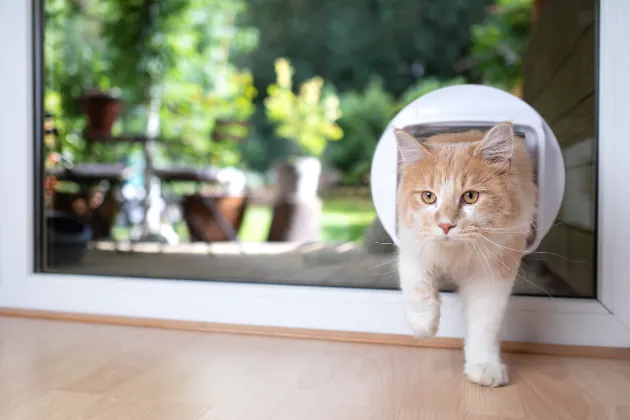
Cat flap installations require careful planning. A cat flap cannot simply be cut into an existing toughened double-glazed unit, and modifying a fitted pane can compromise its safety and performance. A glazier will normally measure the opening, check the glass type and recommend a new purpose-made unit, which may be toughened or laminated depending on the door, security needs and cat flap design.
Choose the right safety glass
Before arranging a repair or replacement, consider the following points:
Is the glass in a door, beside a door or close to floor level?
Would retained glass after breakage improve security or reduce risk?
Is traffic noise, privacy or acoustic performance a concern?
Does the pane need a hole for a cat flap, lock, vent or other fitting?
Does the existing frame support the weight and thickness of the proposed glass?
Do not rely on appearance alone to identify toughened or laminated glass. Markings, edge details, thickness and the construction of the window or door can all provide useful clues, but a professional inspection is the safest way to confirm the specification and assess compliance.
Get expert glazing advice from Hunters Glass
Hunters Glass Ltd can inspect damaged or outdated glazing and advise on the most suitable replacement for your property. Whether you need domestic glazing, commercial glazing or professional cat flap fitting, the team can help specify the glass, check the frame and plan any required cut-outs before manufacture.
For guidance on toughened versus laminated glass, contact Hunters Glass Ltd on 03301331655. A professional assessment can give you confidence that your new glazing is safe, practical and suited to the way you use your home or business.
Other Articles